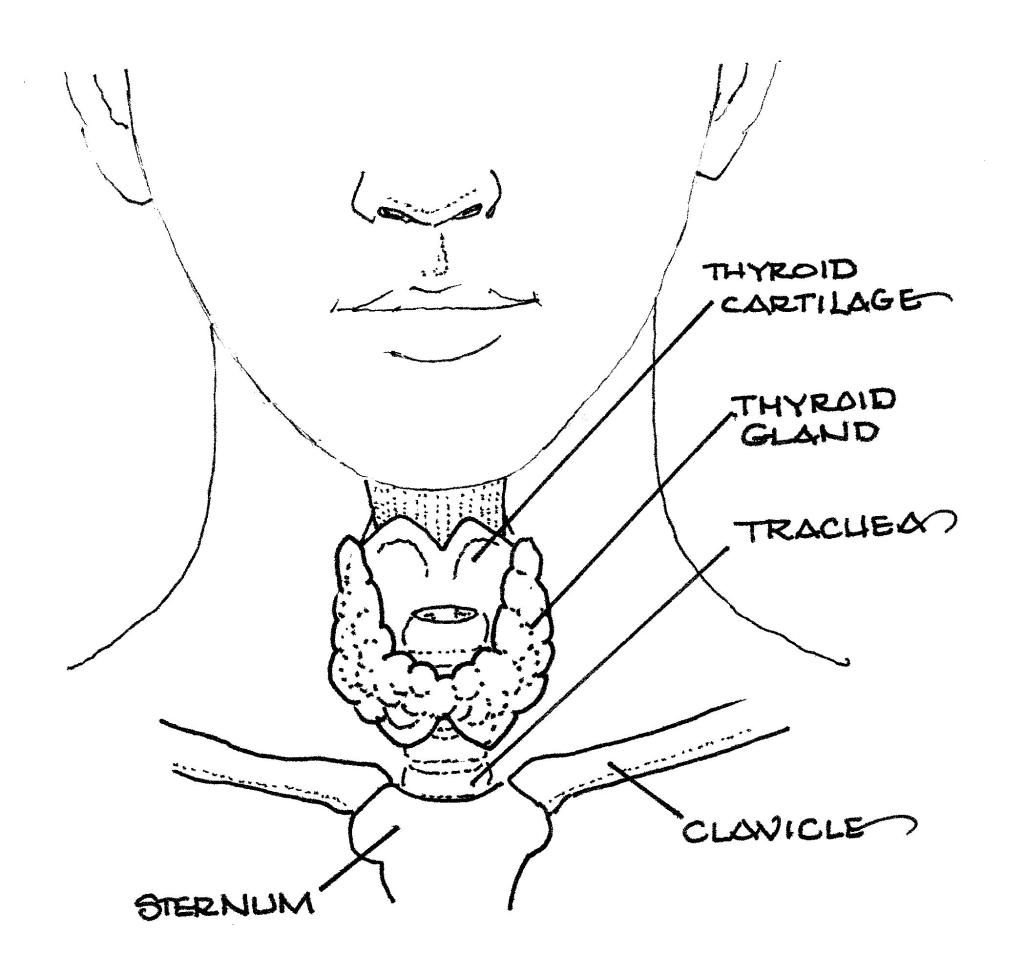
The thyroid is butterfly-shaped glandular tissue resting on the trachea in the lower front of the throat. It produces and secretes hormones that control the body’s metabolic rate – how efficiently the body transforms food into energy. Of course, all cells in the body require energy to function so the thyroid’s activity affects all aspects of health, especially all things having to do with the many functions of the brain. Hyperthyroidism is when the thyroid overproduces hormones; when there is under-production, it is called hypothyroidism. Either condition may cause the thyroid to become enlarged – a condition called a goiter.
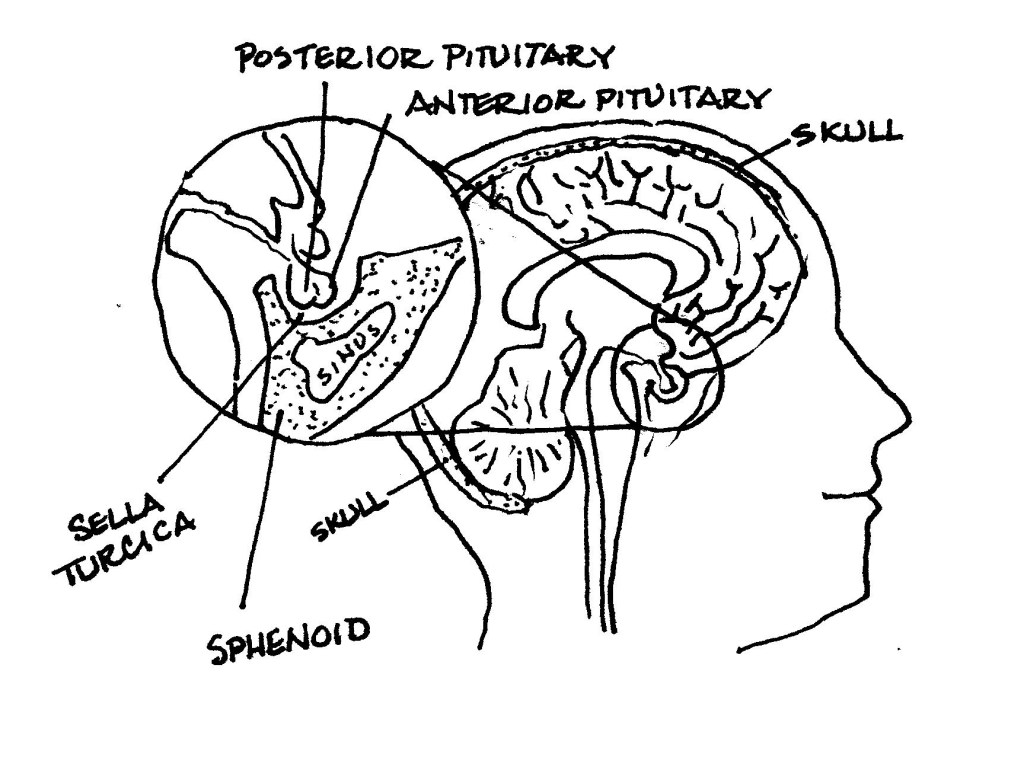
The thyroid is controlled by the pituitary gland, a pea-size structure that dangles like a teeny punching bag from the base of the brain.
I’ve discussed in previous posts how susceptible the brain is to injuries and how the skull can be part of the problem, providing a generally immovable object for the gelatinous brain to splat against. There’s another bone within the skull that can contribute to the problem: the sphenoid. The sphenoid is one of the more complicated bones in the body and is part of the rugged “floor” the brain rests on.
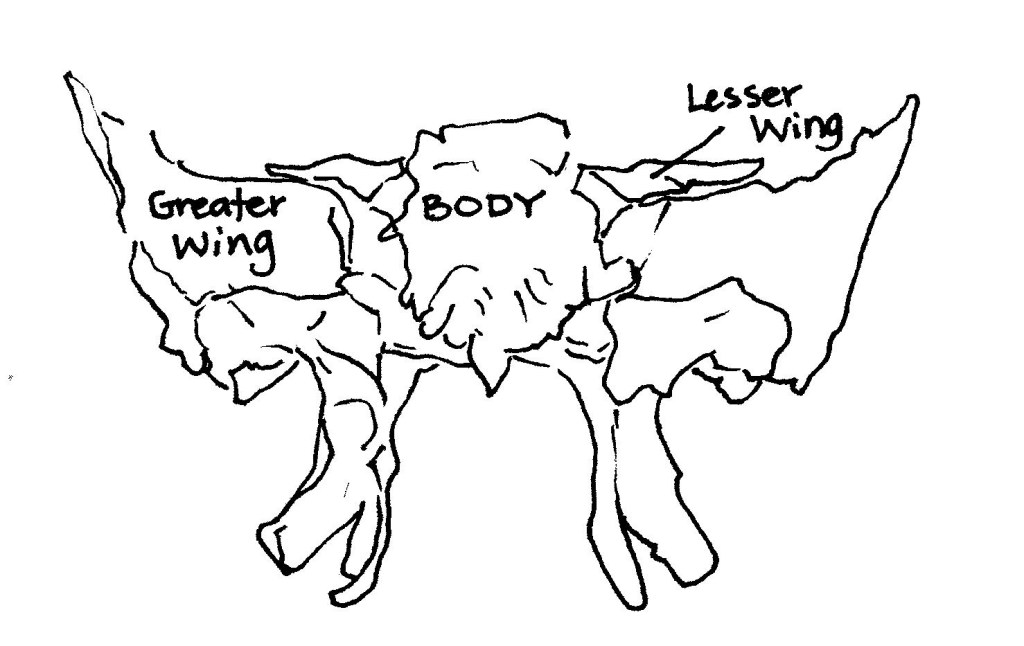
When all parts of the brain are where they belong, the pituitary sits in a crater in the sphenoid called the Sella turcica or Turkish saddle. Should the bones of the skull shift, the pituitary can be pinched. Why would that matter? Although just a tiny, pendulous bleb of tissue, the pituitary is referred to as the “master gland”. If you think about the vast influence of the thyroid and factor in the pituitary’s control over the thyroid, you get an idea of just how bad things can go for someone when these glands don’t function properly.

 My Life in Brain Injuries
Leave a comment