Neurons are microscopic, gangly, and FRAGILE. Without the elaborate “insulation” provided by glial cells, neurons are brittle and become tangled. Unfortunately, glial cells are susceptible to damage from stress hormones, especially cortisol which can corrode glia like battery acid.
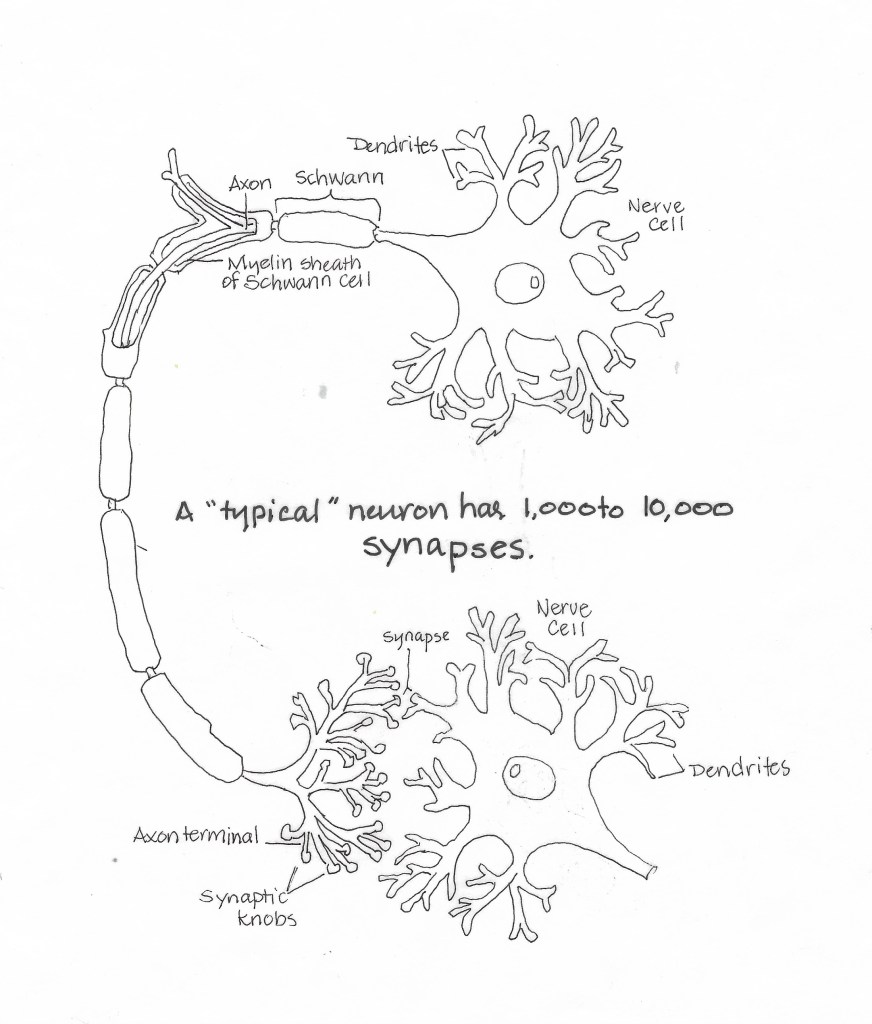
In addition to the fragility of the neuron, the layout of the neurons in relationship to each other can provide a challenge. A synapse is the space between a synaptic knob of the axon terminal and a dendrite of the next neuron. It is over this space that neurotransmitters move from one neuron to another. In order for a synapse to facilitate the transfer of neurotransmitters from the presynaptic knob to the postsynaptic receptor site, the distance must be between 20 and 40 nanometers. It’s a little like electrical wires – too close and they short out; too far and the “signal” can’t reach.
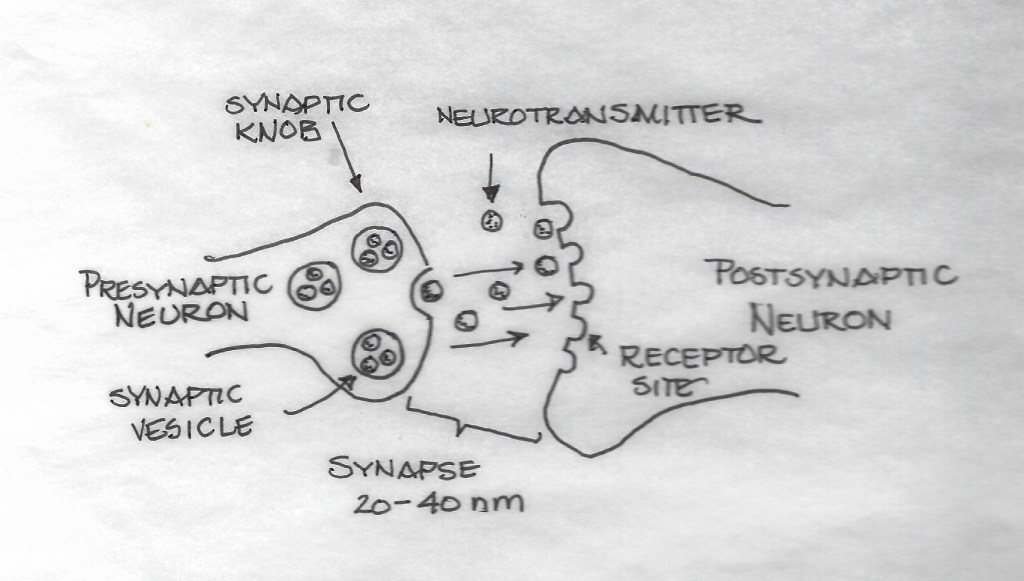
20 to 40 sounded pretty wide to me until I investigated what a nanometer is. If you printed this page out on a standard piece of paper, picked that paper up with your thumb on one side of the page and your forefinger on the other, the distance between your thumb and finger would be approximately 100,000 nanometers. So, 20 to 40 doesn’t give us much wiggle room.
In the last post, we’ve established how the force of a blow to the head or whiplash can cause the brain to move within the skull, a lot like a water balloon. That shapeshifting certainly challenges the synaptic connections between neurons. Fortunately, in the case of low level impact, redundancy of circuitry generally allows us to keep functioning.

 My Life in Brain Injuries
Leave a comment