Let’s start with the skull.
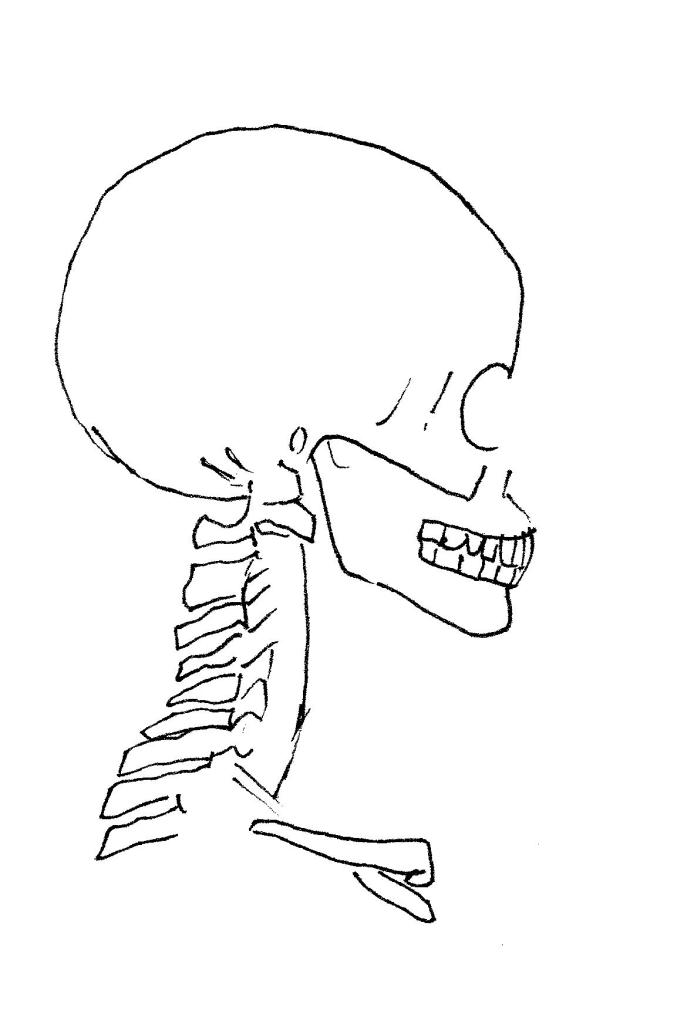
The skull, on a normal day, protects the brain which sits, all glumpy – somewhat like a child’s balloon filled with pudding – in the skull. Because the living brain is nothing like the rubbery, dense preserved brains of science labs and hands-on museums, it needs all the protection it can get. Generally, the skull provides the needed support for the brain and the lacy spinal column protects the spinal cord but because of their design, on those days when there is rapid acceleration/deceleration causing a sharp flexion/extension of the neck, (perhaps your car was rear ended), the “design” can be problematic. The common name for this flexion/extension is “whiplash”.
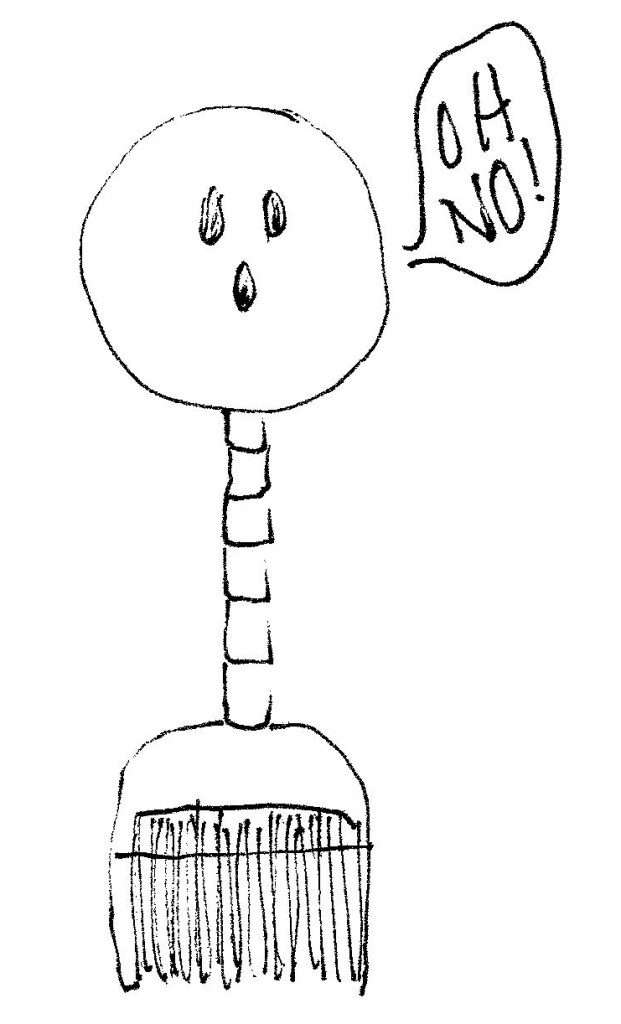
The head atop the spinal column is much like a bowling ball perched on a segmented broomstick – a precarious situation at best.
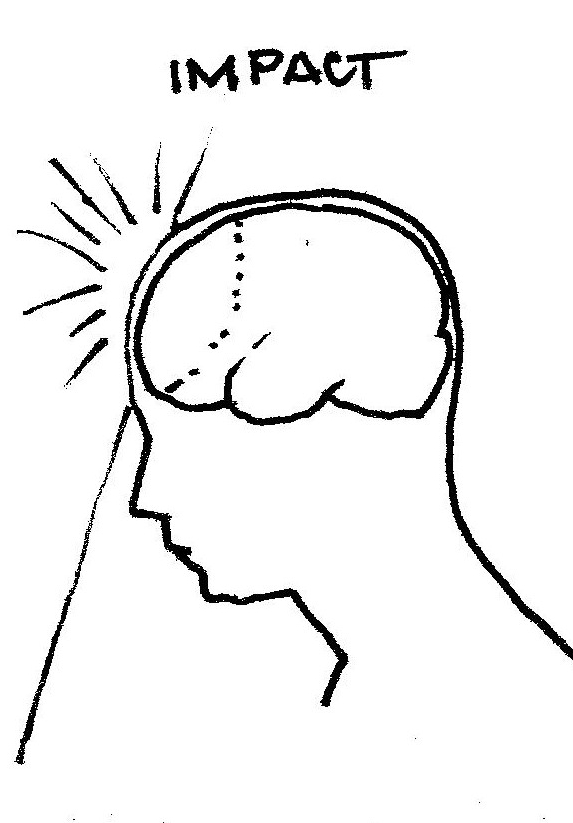
An “impact” injury occurs when the skull comes in contact with another solid object, such as a dashboard or baseball bat. This may or may not cause the skull to fracture, but the portion of the brain behind the area of impact will be affected first and most extensively. That said, TBIs can have a ripple effect that occurs over extended periods – days to years.
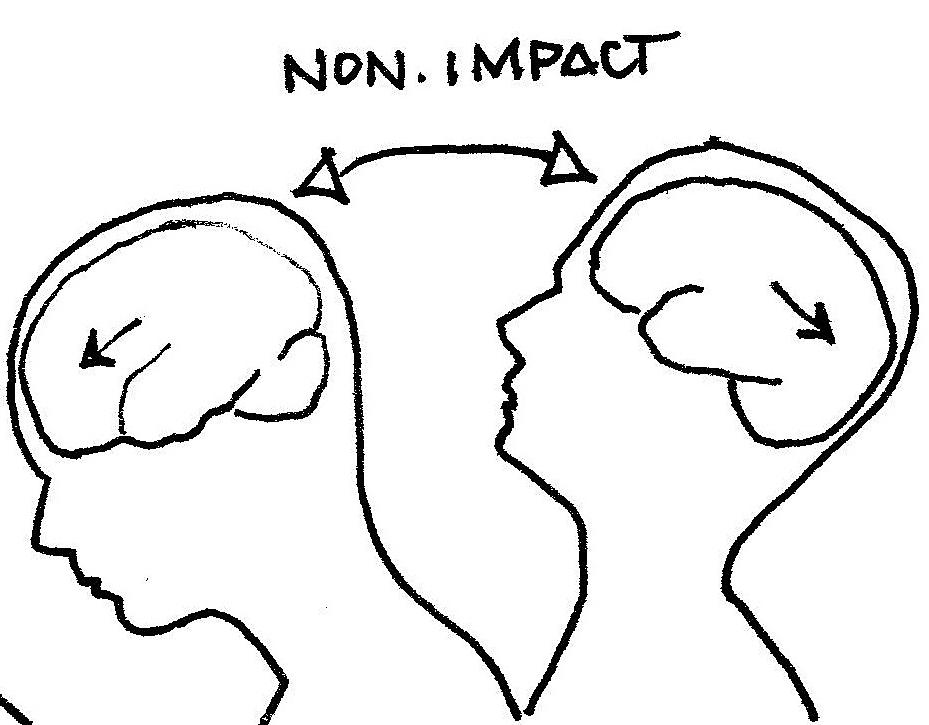
A “non-impact” injury occurs when the skull/brain combo is whipped back and forth as shown here. The brain smacks twice against the inside of the skull, splaying a bit on impact each time. Have you ever seen a slow-motion video of a water balloon thrown against a wall – how it flattens out before it bursts? Something similar happens with the brain, although the “bursting” isn’t the same. This phenomenon occurs because the brain is somewhat liquid-ish (pudding) and isn’t necessarily snugly packed in the skull. Neuronal damage has been shown to occur in collisions as slow as three miles/hour, so fender benders can also be brain benders.
A newborn baby’s head is the largest part of its tiny body. A baby grows inside its mother’s uterus primarily rolled forward – the fetal position. Once born, its head must be supported or it will flop because the muscles of the neck and shoulders need to strengthen in order to hold up that heavy, heavy head. In order for a baby to learn to focus her eyes, she must hold her head steady which causes the cervical spine to change shape, creating an arch to stabilize the head on the shoulders. This somewhat precarious pedestal is called the primary curve – because it is the first we accomplish – and it’s all we have to hold our heads high for the rest of our lives. [In the past several years, people have been radically challenging their primary curve by thrusting their heads forward to look at their computer screens and phones, leading to chronic neck, shoulder and head pain.]
Toddlers, by definition, toddle. They are developing their secondary curve – the change in shape of the lower spine that occurs when a child learns to balance on two feet and start walking. We gain skills by testing them, failing, correcting and testing again – the scientific process. Toddlers are mad – as in hyper focused & diligent – scientists. They are failing and falling ALL the time. Their heads are about a third of their body size at this stage and the heaviest part of their bodies. Consequently, they are frequently landing on their butts and/or bonking their heads. If this happens from their standing position onto a soft carpet or, better yet, soft ground, the falls are probably of little significance to the child’s central nervous system. Humanity couldn’t have survived these millennia if every fall and subsequent shock to the CNS resulted in serious damage to a child’s brain.
Why can landing on the rear end be problematic, especially as we age? Remember, the CNS is made up of the brain AND the spinal cord which meets its end in the derriere. Falling onto one’s butt shakes the entire central nervous system and can, if the landing is abrupt enough, jam the brain into the skull.
All that said, the brain can heal.

 My Life in Brain Injuries
Leave a comment